


 View all conditions
Acne and Acne Scar Treatment in North London
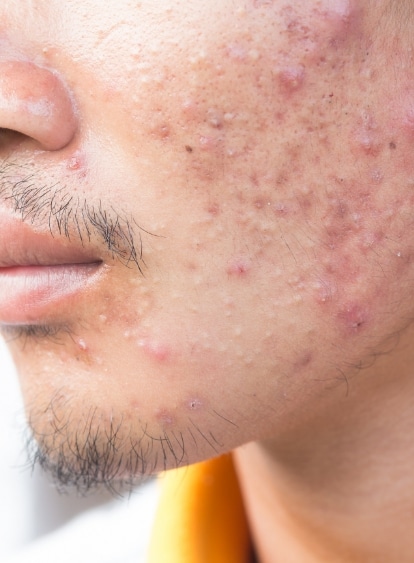
View treatmentsAcne commonly appears as spots, blackheads, or inflamed pimples on the skin. It typically develops when pores become blocked with excess sebum and dead skin cells, or when hormonal changes trigger increased oil production.
These hormonal shifts can happen at different stages of life. Adolescence and the menopause are two common examples, often leading to outbreaks that can vary from mild congestion to more persistent, inflamed acne.
For many people, acne is more than a surface concern. Ongoing breakouts can affect confidence, particularly when they are visible or difficult to manage. It is also very common to feel tempted to pick or squeeze spots, but this can worsen inflammation and increase the likelihood of infection or longer-term skin damage.
After the skin heals from active acne, it can often leave behind visible marks or uneven texture, otherwise known as acne scarring.
Acne & Acne Scarring Are Not the Same Problem
At Ambra we first establish whether we are treating active inflammatory acne, residual redness or pigmentation, true structural scarring, or a combination of these. That distinction determines the treatment plan.
Active Acne
Active acne may include congestion, blackheads, whiteheads, papules, pustules or deeper inflammatory lesions.
Before focusing on scarring, active acne often needs to be brought under better control.
Depending on assessment, Ambra may incorporate skincare, peels, Aerolase Neo and other skin treatments into the treatment strategy.
Acne Scars
A flat red or brown mark left after a spot is different from a structural acne scar.
Post-inflammatory hyperpigmentation: brown or darker marks that remain after inflammation.
Post-inflammatory erythema: persistent red or pink marks following acne.
True acne scarring: a structural change in the skin caused by alteration of collagen following inflammation.
Understanding the difference prevents unnecessary or inappropriate treatment.
Types of Acne Scarring
Ice-pick scars: narrow, deeper scars extending into the skin.
Boxcar scars: more clearly defined depressions with relatively sharp edges.
Rolling scars: broader depressions that can give the skin an undulating appearance and may involve tethering beneath the surface.
Many patients have more than one scar type, which is why one treatment rarely addresses every component equally.
Acne & Scarring Treatment
At Ambra Aesthetic Clinic, acne and acne scarring are treated using a combination of approaches that focus on improving the skin’s structure over time.
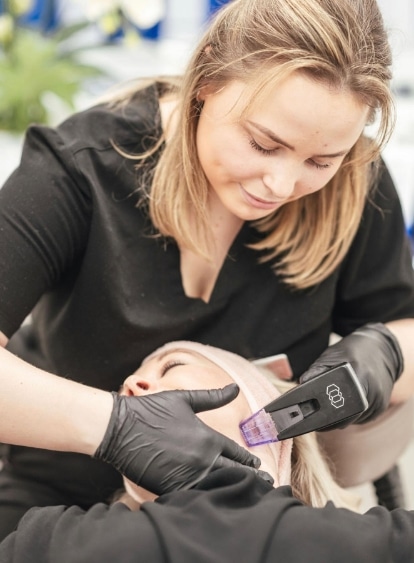
Treatments such as microneedling, subcision, and TCA cross peels are used to gently stimulate the skin’s natural repair process. In practice, this means encouraging new collagen to form, helping to smooth uneven areas and improve overall texture. Deep cleansing and controlled exfoliation also support clearer pores and help reduce the likelihood of further breakouts.
Alongside in-clinic care, maintaining a consistent skincare routine at home plays an important role. Medical-grade products, including ranges such as ZO Skin Health and Obagi Medical, can help to manage oil production, support skin renewal, and keep the skin in a more stable condition between treatments.
When considering acne treatments in North London, it is helpful to think in terms of gradual improvement rather than immediate results. Skin renewal takes time, and treatments are typically most effective when carried out as part of an ongoing plan. Many patients exploring acne treatment find that a tailored combination of in-clinic procedures and home care leads to more consistent, manageable results over time.
For more established scarring, Acne scar treatment in North London often focuses on releasing tight scar tissue beneath the surface and encouraging new collagen to develop. Over a series of sessions, Acne scar treatment can help to soften the appearance of indentations and improve overall skin texture in a way that looks natural and progressive.
Those seeking acne and acne scar treatment in Finchley often benefit from combining professional treatments with consistent at-home care. In many cases, acne treatment is most effective when supported by small, practical changes such as avoiding irritation, using appropriate products, and allowing the skin time to heal properly between treatments.
Why We Often Combine Treatments
Acne scarring can involve depth + texture + tethering + pigmentation + redness + collagen loss.
A single device cannot necessarily correct all of these. At Ambra, a treatment programme may therefore combine technologies such as…
- CO2 laser resurfacing
- NeoGen Plasma
- Morpheus8
- microneedling
- Aerolase
- chemical peels
- regenerative treatments
Treatment is selected according to scar type, skin type, downtime tolerance and clinical assessment.
Our objective is not simply to make scars look temporarily smoother. Where appropriate, we aim to improve inflammation first and then create a longer-term strategy for texture, collagen and skin quality.
For acne treatments in North London, book your appointment today.
Treatments we offer for Acne and Acne Scar Treatment in North London

Client reviews
Used Dr Maryam McMillan for a few years now. She is AMAZING. Would not trust anyone else with my face now. So happy. Feel the most confident I’ve ever felt. Prices are good and service even better x
 Callie Jayne
3 years ago
I went to see Dr McMillan for the first time about a year ago so she could revise some badly done under eye filler NOT DONE BY DR MCMILLAN, and she’s done the most fantastic job i had terrible anxiety from the previous injector and was very nervous, I did so much research but decided to go ahead with Dr McMillan as she was so reassuring and honest with it all
Mel
3 years ago
Having visited many clinics across the world, Ambra Aesthetic provides the highest in skin care. The staff are incredibly professional & knowledgeable. They always tailor the treatments according to your skin type. They are the best.
Alice Katz
3 years ago
I would highly recommend Maryam and her team at Ambra Aesthetic clinic, my husband had dental treatment with straightening and whitening of his teeth and the results are amazing. I have also had various treatments and we are both very pleased with the service, kindness shown and professionalism. Thank you Ambra. See you soon.
Liza Pluto
3 years ago
Ambra Aesthetics are the place to go to for professional, friendly service. You don’t need to go to Harley Street. Dr M and her team are all experts and really take care of you giving the best treatments and advice. Sam on the front desk is a dream. In lots of places the staff can look scary from doing too much but Ambra you can tell it’s all about discrete subtle tweakments. . Don’t hesitate to go!
Dan
3 years ago
Such friendly, professional service! Dr Maryam is brilliant and everyone at the clinic is so helpful. Ambra is excellent at Profilho, dermal fillers and Hydrafacial. It is like a top Central London aesthetic clinic on your doorstep – only with easy parking and lovely people!
Sue Cipin
3 years ago