


 View all conditions
Pigmentation
View treatmentsPigmentation refers to the unique colouring of the skin and is determined by the production of Melanin – a substance that is found naturally in the body.
Issues related to a discolouration of the skin can affect a variety of areas on the face or body, with a number of causes.
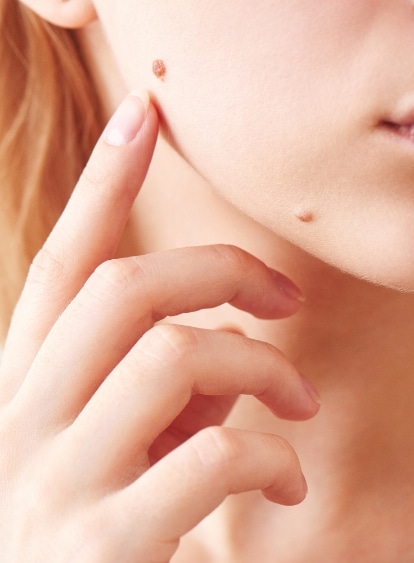
This common concern can be seen in two different forms: Hyperpigmentation occurs when too much Melanin has been produced. Most frequently seen affecting the face, hands, chest, neck and shoulders; Hyperpigmentation is often a result from hormonal changes, trauma to the skin or exposure to the sun. Usually taking on the form of age spots or freckles, this condition is likely to be of no harm to the affected person, with adults in their 30’s or 40’s being common candidates.
Hypopigmentation is a result of too little Melanin being produced, causing the skin to become lighter in appearance. This condition may take the form of small localised patches on the face or body, or cover larger areas. This concern is most likely to be caused by our inherited genes, with environmental conditions and trauma to the skin being other contributors.
Book a pigmentation and skin assessment
Not All Pigmentation Is the Same
Brown marks, patches and uneven skin tone are commonly grouped together as “pigmentation”. But pigmentation is not one condition – and treating every dark mark in the same way can lead to disappointing results and, in some cases, worsening pigmentation.
At Ambra Aesthetic Clinic in North Finchley, pigmentation treatment begins with assessment rather than a laser or peel.
Sun Damage & Solar Lentigines
Often referred to as sun spots or age spots, solar lentigines are usually well-defined areas of increased pigmentation associated with cumulative UV exposure. Depending on skin type and assessment, they may respond to targeted light, laser, resurfacing or skincare strategies.
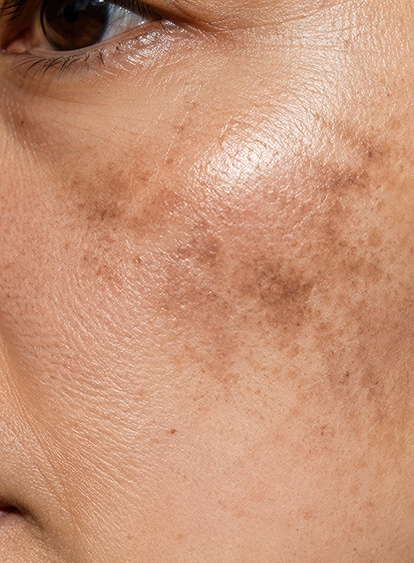
Melasma
Melasma commonly appears as symmetrical patches of pigmentation, frequently affecting the cheeks, forehead and upper lip. It behaves very differently from an isolated sun spot.
Hormonal influences, UV exposure, visible light and heat may all contribute, which means aggressive treatment is not always appropriate. Management frequently requires a long-term strategy rather than a single treatment.
Post-Inflammatory Hyperpigmentation – PIH
PIH develops after inflammation or injury to the skin. It may follow acne, picking, eczema or other inflammatory skin conditions and can also occur following inappropriate or overly aggressive treatment. Treating the underlying inflammation and protecting the skin are therefore important parts of management.
Freckles
Freckles are small areas of increased pigment that are often genetically influenced and become more visible with sun exposure. Treatment depends on skin type, distribution and the patient’s objectives.
Uneven Skin Tone
Not every patient has one clearly defined pigmentation condition. Sometimes there is a combination of sun damage, redness, inflammation and irregular pigment creating an overall uneven complexion. These patients often benefit from a combination strategy.
Why Assessment Matters
Before treating pigmentation we consider:
- the type of pigmentation
- skin type
- depth and distribution
- inflammation
- previous treatment
- hormonal influences
- sun exposure
- medications
- skincare
- risk of PIH
For some patients we may recommend stabilising the skin before using energy-based treatment.
Can Pigmentation Come Back?
Yes. Many pigmentation disorders can recur, particularly when there is continued UV exposure or an underlying condition such as melasma. Sun protection and an appropriate home skincare programme can therefore be as important as treatment performed in clinic.
Pigmentation Treatments at Ambra
Depending on assessment, treatment may include medical-grade skincare, chemical peels, Lumecca IPL, Aerolase Neo, Clear + Brilliant, CO2 resurfacing, microneedling or combination treatment.
Not every treatment is suitable for every pigmentation type. This is precisely why we do not advertise one device as the answer to all pigmentation.
Treatments we offer for Pigmentation


Client reviews
Used Dr Maryam McMillan for a few years now. She is AMAZING. Would not trust anyone else with my face now. So happy. Feel the most confident I’ve ever felt. Prices are good and service even better x
 Callie Jayne
3 years ago
I went to see Dr McMillan for the first time about a year ago so she could revise some badly done under eye filler NOT DONE BY DR MCMILLAN, and she’s done the most fantastic job i had terrible anxiety from the previous injector and was very nervous, I did so much research but decided to go ahead with Dr McMillan as she was so reassuring and honest with it all
Mel
3 years ago
Having visited many clinics across the world, Ambra Aesthetic provides the highest in skin care. The staff are incredibly professional & knowledgeable. They always tailor the treatments according to your skin type. They are the best.
Alice Katz
2 years ago
I would highly recommend Maryam and her team at Ambra Aesthetic clinic, my husband had dental treatment with straightening and whitening of his teeth and the results are amazing. I have also had various treatments and we are both very pleased with the service, kindness shown and professionalism. Thank you Ambra. See you soon.
Liza Pluto
2 years ago
Ambra Aesthetics are the place to go to for professional, friendly service. You don’t need to go to Harley Street. Dr M and her team are all experts and really take care of you giving the best treatments and advice. Sam on the front desk is a dream. In lots of places the staff can look scary from doing too much but Ambra you can tell it’s all about discrete subtle tweakments. . Don’t hesitate to go!
Dan
2 years ago
Such friendly, professional service! Dr Maryam is brilliant and everyone at the clinic is so helpful. Ambra is excellent at Profilho, dermal fillers and Hydrafacial. It is like a top Central London aesthetic clinic on your doorstep – only with easy parking and lovely people!
Sue Cipin
2 years ago