


 View all conditions
Lines, Wrinkles & Skin Ageing
View treatmentsAs we age, lines and wrinkles can start to appear anywhere on the face and body.
Ageing and its effects can vary from person to person, and is often dependent on genetics. However, some lifestyle choices such as smoking, alcohol consumption and a poor diet can all contribute to speeding up this natural process, as well as over exposure to the sun and muscle movements in the face.
Collagen and Elastin are two products that are found in the skin, and are the elements that help to keep the skin’s structure strong, soft and supple. The natural effects of ageing disrupt the effective production of collagen and elastin, and this results in the skin losing volume and elasticity, as well as essential moisturising properties.
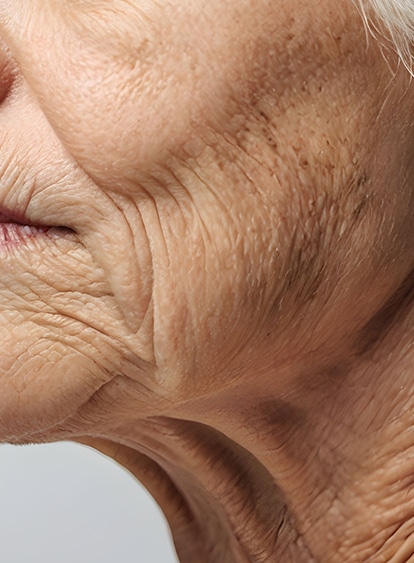
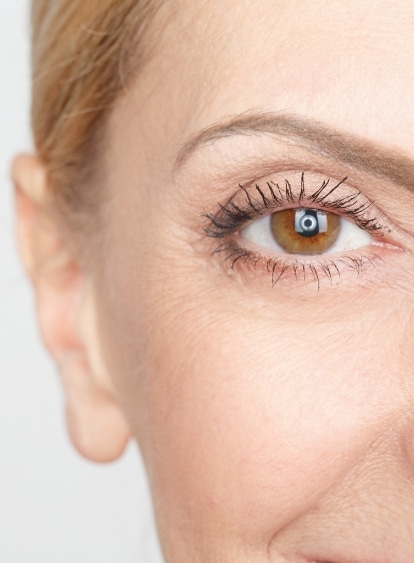
Often becoming deeper and more inset over time, lines and wrinkles can affect all areas of the upper, lower and mid-face, presenting themselves as: Crow’s feet, forehead lines, frown lines, lip lines and nasolabial and marionette folds.
The skin on the hands and neck (decolletage) is naturally thinner, and as ageing can bring about further thinning of the skin and a change in structure, they too can develop wrinkles.
At Ambra Aesthetic Clinic, we offer specially formulated treatments such as Dermal Fillers and Wrinkle Relaxing methods which can be used to soften the appearance of wrinkles. Dermal Fillers add volume to the skin, whereas wrinkle relaxing treatments ease muscle contractions.
Facial Ageing Is More Than Wrinkles
A line on the face is often the visible result of several processes happening beneath it. At Ambra, we therefore do not automatically treat every wrinkle in the same way.
Facial ageing can involve changes in movement, collagen, volume, skin laxity, texture and hydration.
Understanding which factors are contributing allows us to create a more considered treatment plan.
Movement
Repeated facial movement contributes to expression lines around areas such as the forehead, frown and eyes. Where excessive muscle activity is the main cause, a treatment aimed specifically at muscle movement may be considered.
Collagen Loss
Collagen provides structural support to the skin. Production changes with age, contributing to thinner skin, reduced firmness and increasingly visible lines. This is where collagen-stimulating and regenerative treatments can play an important role.
Volume & Structural Change
Ageing also changes the deeper structures of the face. Fat compartments, bone and supporting tissues change over time, meaning a fold or shadow cannot always be explained by the skin alone.
In selected patients, carefully placed dermal filler may be appropriate. But volume should be replaced only where it is needed.
Skin Laxity
As support and elasticity decrease, skin can become less firm. This may contribute to jowling, changes around the jawline and deeper folds. Skin-tightening technologies may therefore form part of the plan.
Texture
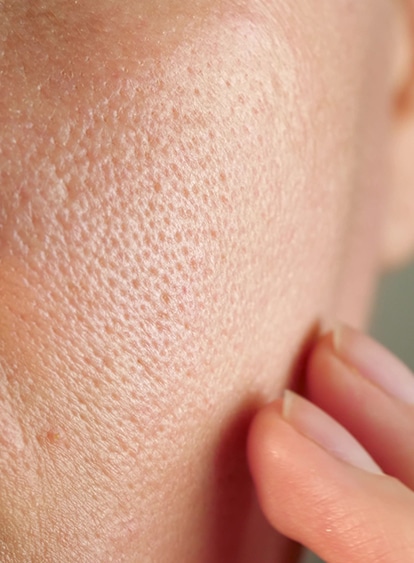
Fine lines are often more visible when skin texture becomes rough or damaged. Resurfacing treatments can target the surface and deeper skin depending on the level of correction required.
Hydration & Skin Quality
Dry, dehydrated or poor-quality skin reflects light differently and can make fine lines appear more pronounced. Skin boosters and regenerative treatments may improve this component without changing facial shape.
Resurfacing and hydration of the skin to restore the skin’s healthy properties, can be achieved through treatments such as Profhilo.
Treatments we offer for Lines, Wrinkles & Skin Ageing



Client reviews
Used Dr Maryam McMillan for a few years now. She is AMAZING. Would not trust anyone else with my face now. So happy. Feel the most confident I’ve ever felt. Prices are good and service even better x
 Callie Jayne
3 years ago
I went to see Dr McMillan for the first time about a year ago so she could revise some badly done under eye filler NOT DONE BY DR MCMILLAN, and she’s done the most fantastic job i had terrible anxiety from the previous injector and was very nervous, I did so much research but decided to go ahead with Dr McMillan as she was so reassuring and honest with it all
Mel
3 years ago
Having visited many clinics across the world, Ambra Aesthetic provides the highest in skin care. The staff are incredibly professional & knowledgeable. They always tailor the treatments according to your skin type. They are the best.
Alice Katz
2 years ago
I would highly recommend Maryam and her team at Ambra Aesthetic clinic, my husband had dental treatment with straightening and whitening of his teeth and the results are amazing. I have also had various treatments and we are both very pleased with the service, kindness shown and professionalism. Thank you Ambra. See you soon.
Liza Pluto
2 years ago
Ambra Aesthetics are the place to go to for professional, friendly service. You don’t need to go to Harley Street. Dr M and her team are all experts and really take care of you giving the best treatments and advice. Sam on the front desk is a dream. In lots of places the staff can look scary from doing too much but Ambra you can tell it’s all about discrete subtle tweakments. . Don’t hesitate to go!
Dan
2 years ago
Such friendly, professional service! Dr Maryam is brilliant and everyone at the clinic is so helpful. Ambra is excellent at Profilho, dermal fillers and Hydrafacial. It is like a top Central London aesthetic clinic on your doorstep – only with easy parking and lovely people!
Sue Cipin
2 years ago